UAVs: Seek and Hide
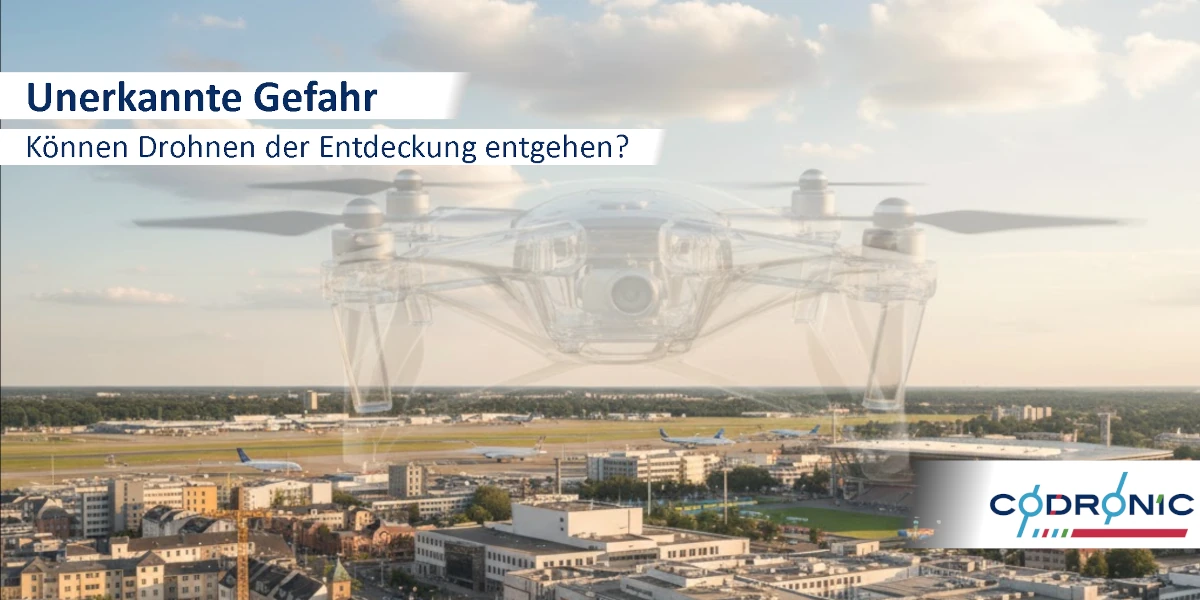
Concealment and Detection – An Eternal Race?
The race between detection systems and so-called concealment technologies in UAVs is not new. But, it is an increasingly urgent issue. Current regulatory steps are changing the balance of power. For example, mandatory Remote ID in the EU since early 2024 favors detectable, “compliant” systems. This is true at least in the civil sector.
Meanwhile, security authorities and operators are strengthening their sensors. They use AI-supported evaluation. Institutions like WIWEB and the Fraunhofer Society research ways to reduce or obscure platform signatures.
Often, both sides also work hand-in-hand. Insights from concealment technology benefit the improvement of detection systems. The reverse is also true. It seems to be a never-ending race. This is true as long as both sides continue to develop. Can one side already secure the pole position?
Radar & Micro-Doppler
Radar remains the backbone of many C-UAS solutions. Modern systems use Micro-Doppler signatures of rotating propellers. This helps with recognition and classification.
Range and reliability are high in open terrain. In urban terrain, however, clutter (disturbing reflections) and multipath effects reduce the detection rate. Research shows that band selection, dwell time, and signal processing are crucial. They allow for reliable extraction of the Micro-Doppler signature.
The “countermeasures” on the research level involve signature-reducing construction and material choice. This aims to make radar detection more difficult.
VIS and IR (Optical/Thermal)
AI-supported image processing greatly increases the detection probability and classification. This is for camera-based systems. Still, their effectiveness depends strongly on weather and background.
Measures reduce visual/thermal contrasts. This is done on the material and design level. This aims to reduce detectability even under best conditions. However, this requires significant effort. It involves trade-offs. These include weight, cooling, and material costs.
Acoustic Detection
Acoustic systems detect characteristic rotor and propulsion noise. They perform well in quiet environments and at short distances. However, their range and reliability drop sharply. This occurs in noisy, windy, or built-up environments.
Modern approaches couple microphone arrays with Deep Learning models. This increases the range. But, they remain dependent on ambient noise and weather. Reducing acoustic signatures is possible. But, it is technically complex. It requires mechanical damping or aerodynamic optimization. It involves compromises.
RF / Remote ID & Emission Monitoring
Passive RF detection and Remote ID evaluation are very effective. This is true as soon as a UAV actively transmits. Regulatory measures (Remote ID) significantly strengthen this detection chain in the civil sector. They provide standardized identity and position data.
However, “silent” platforms are less visible. This includes solutions that deliberately do not transmit. This limits pure RF detection. This means RF methods are highly effective against compliant, commercial UAS. But, they are limited against fully passive, autonomously operating platforms.
Sensor Fusion & AI — The Real Lever
A central finding of current studies is this: The best balance is achieved by combining multiple sensors. This includes Radar, RF, VIS/IR, and Acoustic data. They are evaluated with AI models. This delivers the best balance of range, reliability, and low error rate.
Multi-Sensor Fusion compensates for the weaknesses of individual modalities. It significantly improves classification and verification. Research shows clear performance gains compared to mono-sensor solutions. Complete concealment is therefore becoming increasingly difficult.
Conclusion & Outlook
Current concealment technologies can make detection difficult in specific scenarios. However, they are rarely universally effective. The increasing capability of Radar Micro-Doppler analysis is important. The regulatory anchoring of Remote ID is key. The spread of multimodal AI fusion is also significant. These factors make complete “invisibility” increasingly hard to achieve.
Research and development are therefore concentrating on:
- more robust multi-sensor fusion,
- more adaptive AI models for changing environments, and
- standardization/regulation.
This continues to improve UAV detection. It sets the bar very high for concealment technologies. But, progress is not static on that side either. The race is still not decided.
For in-depth technical reading, see works on Micro-Doppler detection and Multi-Sensor Fusion. Examples and in-depth publications include MDPI studies on RF+Acoustic Fusion and arXiv/publications on Micro-Doppler detection.


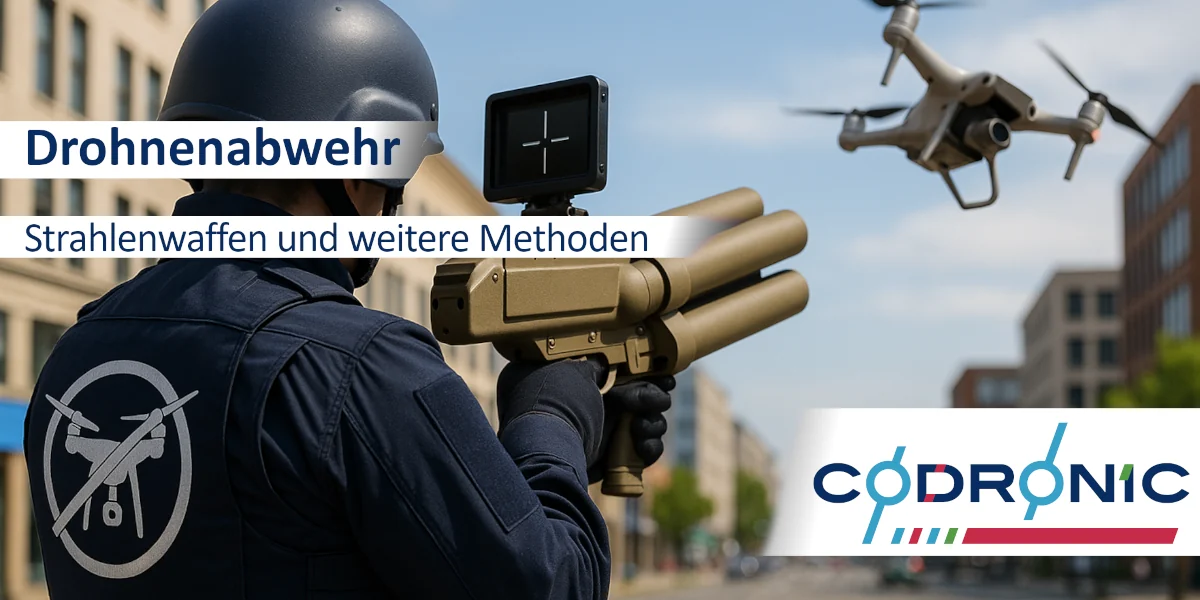
C-UAVs: Principles of Operation, and Classification

Fasteners – High-Tech in a Humble Guise
